
Designers who go to site, and a site team that reads drawings
Roles and what they actually involve
| Role | Experience | What the job is | Monthly band |
|---|---|---|---|
| Junior interior designer | 0 – 2 years | Drawings, detailing, material sourcing, site visits twice a week. You will be measuring flats in month one | ₹25,000 – 40,000 |
| Interior designer | 2 – 5 years | Own two to four projects end to end: brief, layout, BOQ, client meetings, site coordination, handover | ₹40,000 – 70,000 |
| Senior designer | 5 – 9 years | Lead projects and juniors, set the detail language, resolve what goes wrong on site | ₹70,000 – 1,20,000 |
| 3D visualiser | 1 – 5 years | Modelling from measured surveys, material and lighting, revisions. Accuracy matters more than atmosphere here | ₹28,000 – 65,000 |
| Project manager | 4 – 10 years | Programme, procurement, society liaison, subcontractors, cost control across four to six live sites | ₹55,000 – 1,10,000 |
| Site supervisor | 2 – 8 years | One or two sites, daily. Sequence, quality, snagging, worker coordination, society relations | ₹28,000 – 55,000 |
| Estimator and BOQ engineer | 2 – 8 years | Quantities, rates, quotations, variation pricing, reconciliation at close-out | ₹35,000 – 75,000 |
Bands are monthly, before statutory deductions. Where a role is open, the current band is confirmed in the first conversation rather than at offer stage.
What we look for
- Work, not a CV. Send drawings, renders, photographs of something you built, or a BOQ you priced. Three pieces of work with a paragraph each about what was difficult tells us more than four pages of employment history.
- Evidence you have been on a site. We are a build firm. A designer who has never watched a carpenter interpret their drawing will design things that cannot be made, and will learn that expensively on our projects rather than in school.
- Dimensional discipline. Can you read a measured survey, spot a wall that is out of plumb on a drawing, and work out whether a wardrobe fits? This is most of the job and it is testable in twenty minutes.
- Willingness to say a number. Designers who cannot cost their own ideas produce schemes nobody builds. We would rather you were roughly right than silent.
- Clear writing. Half of this job is explaining a trade-off to a client in two sentences. If your email is confusing, your BOQ notes will be too.
- A degree helps and does not decide it. Some of our best people came through a diploma, a drafting job or a family contracting business. Some came through a five-year course. We look at what you can do.
How we hire
- Send work to [email protected]Three pieces with a short paragraph each on what was difficult and what you would do differently. A CV is welcome and is not the thing we read first.
- A conversation, 30 minutesAbout your work, not about your strengths and weaknesses. We will ask you why a detail was drawn the way it was.
- A practical exercise, 2 to 3 hoursA real one: a measured survey to resolve, a BOQ line to price, or a room to detail. Paid, and we tell you in advance what we are assessing.
- A site walkWe take you to a live project and talk about what is happening on it. This is where most candidates decide whether they want the job, which is the point.
- Offer, with the band explainedYou will know where you sit in the band and what moves you up it. We do not negotiate by withholding information.
What the work is actually like
- Mumbai sites, ten to six. Society hours are real and so is the travel. A designer running three projects in Bandra, Powai and Thane will spend real time in traffic, and we plan the week around that rather than pretending otherwise.
- Small teams on each project. One designer, one project manager, one supervisor. Nobody is a resource on a spreadsheet, and nobody can hide behind a process.
- You will meet the client. From your second project, you present your own work and you take the questions. It is uncomfortable for a month and it is how people get good.
- Things go wrong and we do not pretend they did not. A wall is out of plumb, a slab is lower than the drawing, a society changes its mind. The job is solving that well, not avoiding blame for it.
- Learning is on the job and deliberate. Material sessions with suppliers, factory visits, and the expectation that a senior explains a detail rather than just correcting it.
- We do not do unpaid overtime as a culture. Sites have deadlines and occasionally a week is heavy. A permanently heavy week means we have planned badly, and that is a management problem rather than yours.
The best hire we made last year had no degree in interiors and four years in a fabrication workshop. She could tell from a drawing what would be difficult to build, which is a rarer skill than drawing well.
Greenbox principal designer
Internships and early careers
We take two to three interns a year for three to six months, paid, and we treat the placement as a real job rather than as an office presence. An intern here measures flats, produces drawings that get issued, sits in client meetings and goes to site weekly. The expectation on both sides is honest: we are not running a course, and you are not making tea. Where it goes well we offer a junior role at the end, and where it does not we tell you why in writing, because a reference that explains what to work on is worth more than a generic one.
More about us
Who you would be working with is on our team page, how we run projects is on our process, and what we have built is in the portfolio. The studio’s credentials and what we do and do not claim are on awards, press and certifications.
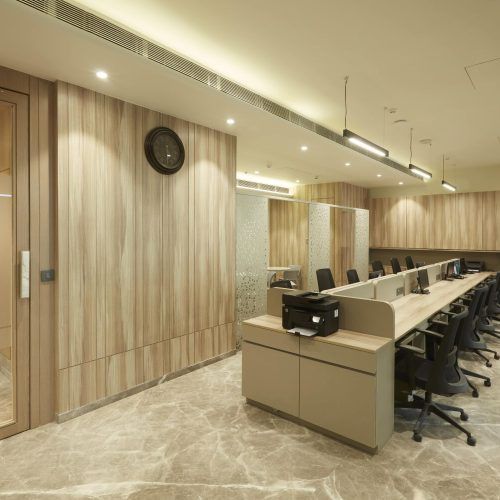
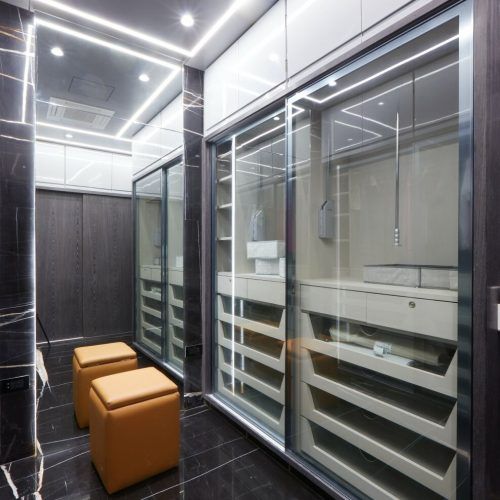
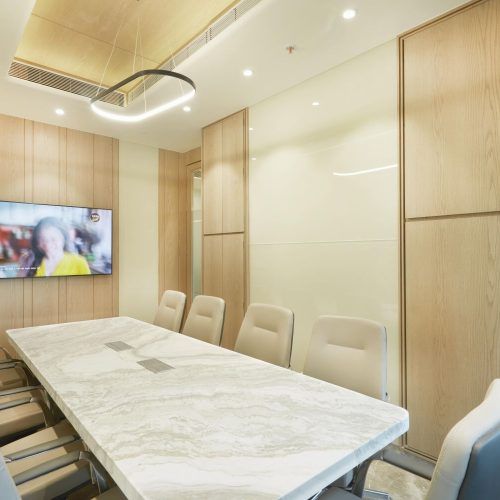
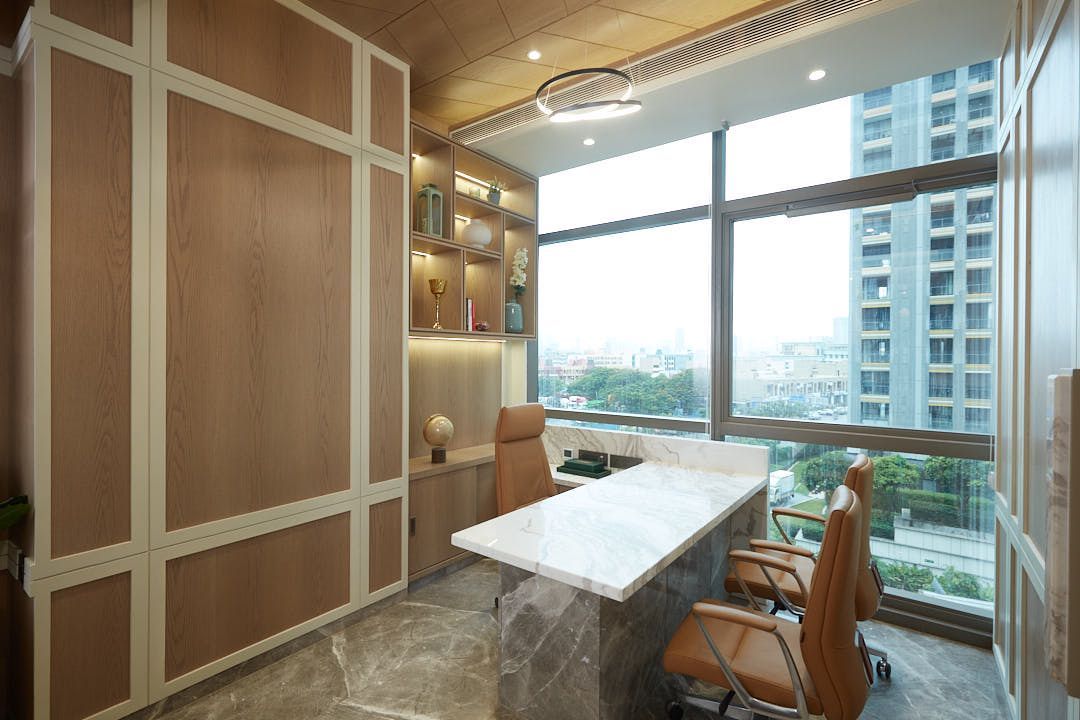
Selected commercial work by Greenbox Design Studio. Tap any image to enlarge.
Frequently asked questions
What roles does Greenbox hire for in Mumbai?+
Junior and mid-level interior designers, senior designers, 3D visualisers, project managers, site supervisors and estimators. Because we are a design-and-build firm rather than a design consultancy, every one of those roles involves both drawing work and site work.
What are the salary bands?+
Monthly, before statutory deductions: junior designer ₹25,000–₹40,000, designer ₹40,000–₹70,000, senior designer ₹70,000–₹1,20,000, 3D visualiser ₹28,000–₹65,000, project manager ₹55,000–₹1,10,000, site supervisor ₹28,000–₹55,000 and estimator ₹35,000–₹75,000. We confirm the band in the first conversation rather than at offer stage.
Do I need an interior design degree?+
It helps and it does not decide it. Some of our best people came through a diploma, a drafting job or a family contracting business, and some through a five-year course. What we assess is whether you can read a measured survey, detail something that can actually be built, cost your own ideas roughly, and explain a trade-off in two sentences.
What does the hiring process involve?+
Send three pieces of work with a paragraph each to [email protected], then a thirty-minute conversation about that work, then a paid two to three hour practical exercise on something real, then a walk around a live site. The offer comes with the band and what moves you up it explained.
Do you take interns?+
Two to three a year for three to six months, paid, treated as a real job. An intern here measures flats, produces drawings that get issued, sits in client meetings and goes to site weekly. Where it goes well we offer a junior role; where it does not we write down what to work on.
What is the work actually like day to day?+
Mumbai sites on 10am–6pm society hours with real travel between Bandra, Powai and Thane; small teams of one designer, one project manager and one supervisor per project; presenting your own work to clients from your second project; and solving the things that go wrong on site rather than escalating them. Occasional heavy weeks, but a permanently heavy week means we planned badly.