

The actual scope
- Space planning. Circulation, furniture fit, storage volume, door swings, clearances.
- Technical drawings. Layouts, elevations, sections, joinery details, electrical and plumbing point drawings.
- Specification. Material grades, hardware brands, finishes, fixtures — written down so they can be verified.
- Services coordination. Making sure the AC, the ceiling, the lighting and the joinery do not occupy the same space.
- Visualisation. 3D views so you can approve before committing.
- Site coordination. Answering the hundred questions trades ask, correctly and consistently.
- Decoration. Colour, styling, soft furnishings — real, but last.
Designer versus decorator versus contractor
| Role | Decides | Produces | Best for |
|---|---|---|---|
| Interior designer | How the space works | Drawings and specification | Anything involving layout or joinery |
| Interior decorator | How the space looks | Schemes, furnishings, styling | Cosmetic refresh of a working layout |
| Contractor | How it gets built | The built work | Executing a resolved design |
If your layout, storage and lighting are already resolved, you need a contractor. They almost never are.
Greenbox principal designer

Design and build under one accountable roof
What you are really paying for
The value of a designer is the rework that never happens: the wardrobe that fits the wall, the socket behind the bed rather than behind the headboard, the AC that does not blow directly onto the dining table, the door that opens fully. None of it is visible in a photograph, and all of it is what makes a home work.

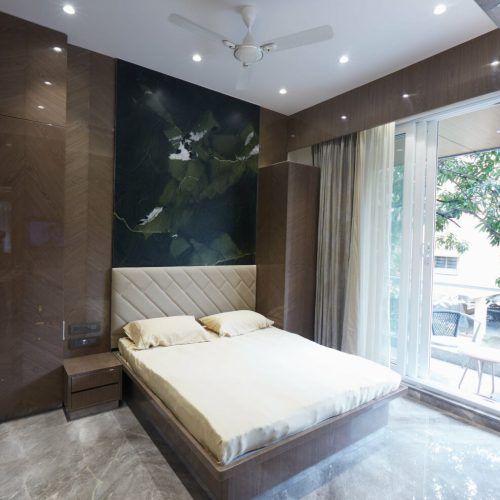


Selected work by Greenbox Design Studio. Tap any image to enlarge.
Frequently asked questions
What is the difference between an interior designer and a decorator?+
A designer plans how space functions — layout, storage, services, lighting — and produces technical drawings. A decorator works within an existing layout on finishes, furnishings and styling. Designers handle anything structural or joinery-related; decorators handle the cosmetic layer.
Do I need a designer or just a contractor?+
A contractor builds what they are told. If your layout, storage volumes, electrical positions and lighting are already resolved, a contractor is sufficient. If they are not, design pays for itself by preventing rework that costs more than the fee.
What drawings should a designer provide?+
Furniture layout, electrical and plumbing point drawings, false ceiling plan with lighting, joinery elevations and sections with dimensions, and a finishes schedule. Without these, the carpenter is making decisions that should have been yours.