
The five questions that decide everything
Twenty-five questions is a useful checklist, but five of them carry most of the weight. If a studio answers these five cleanly, the remaining twenty are usually a formality. If it fumbles any of them, no amount of portfolio gloss compensates.
- Will you give me a line-item BOQ with quantity, unit, rate and brand? A lump-sum figure cannot be compared, verified or disputed.
- Who will be on my site every day, and who signs off the work? The answer is either an employed project manager or a contractor you have never met.
- What exactly is excluded? Painting, electrical, plumbing shifting, loose furniture, curtains, appliances and civil work are the usual omissions.
- What happens if you run late? The honest answer is a defined extension procedure plus a remedy, not a promise that it never happens.
- What is warrantied, for how long, and who honours it? Carcass, hardware and finish usually carry different periods.
Questions about the studio itself
Before scope, establish what kind of business you are dealing with. A design practice, a design-and-build studio and a contractor with a designer on retainer are three different risk profiles, and each is legitimate for a different kind of project. The difference shows up on site in week seven, when something goes wrong and you need to know who has the authority to fix it without renegotiating the price.
- How long has the studio operated under this name, and how many projects were completed last year?
- Is execution in-house, or is it subcontracted to a fabricator? Both work; only one of them means the studio can absorb a mistake.
- How many of your projects are in my building type — old society building, new tower, redevelopment handover?
- Can I see a project you completed twenty-four months ago rather than last month?
- Do you carry contractor's all-risk or third-party liability cover for site incidents?
- Who is my single point of contact, and what happens when that person is on leave?
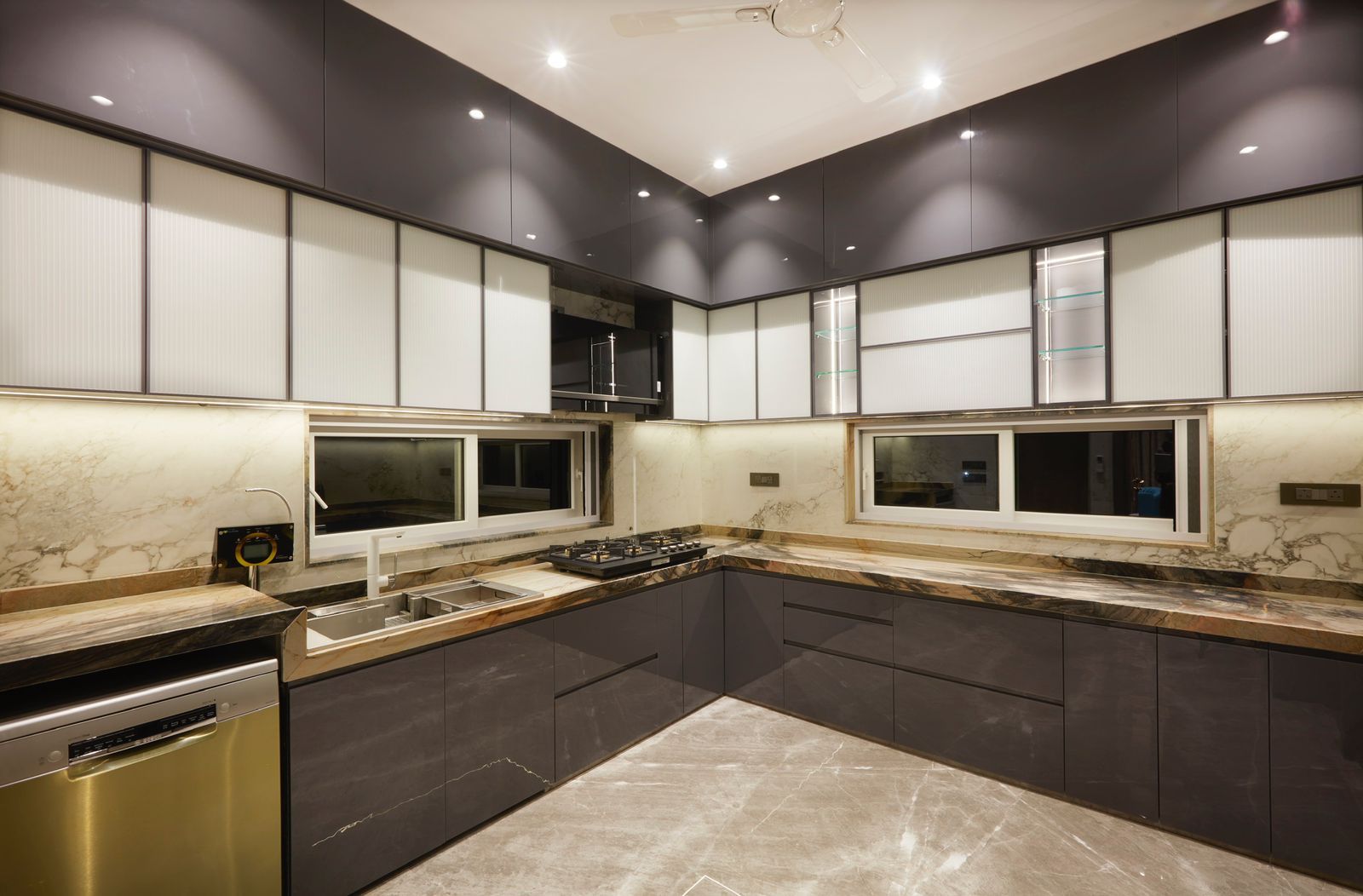
Design and build under one accountable roof
Questions about scope and drawings
Scope disputes cause more bad endings than price disputes. Everything below should be answered before the advance, and the answers should appear in the agreement rather than in a WhatsApp reply.
- Which drawings do I receive — layout, elevations, electrical, plumbing, ceiling, joinery details?
- How many 3D views are included, and how many revisions before it becomes chargeable?
- Do I own the drawings if we part ways after the design stage?
- Is site measurement done by you or taken from the builder's plan? (Builder plans are routinely 2–4% out.)
- Who coordinates with the society, and who applies for the NOC?
- Are appliance and sanitaryware selections part of your scope or mine?
- Will you provide a written material specification sheet alongside the BOQ?
Questions about money
These are the questions clients feel awkward asking and later wish they had. Ask them flatly; a professional studio expects them.
| Ask this | A confident answer sounds like | Treat as a warning |
|---|---|---|
| Is this carpet area or built-up? | Carpet, and here is the measured sheet | We work on builder's built-up |
| Is GST included? | No — 18% on top, shown as a separate line | Silence, or GST buried in the total |
| What grade is the carcass in wet zones? | BWP 710 in kitchen and bathroom walls | Marine ply (a non-standard label) |
| Which hardware brand? | Hettich Sensys hinges, Hafele channels | Imported branded hardware |
| How are variations priced? | Written variation note, signed before work | We will adjust it at the end |
| What is your design fee if I stop after design? | A stated figure, typically 5–8% of value | Design is free with execution |
Every figure a studio quotes should survive being written down. If it only exists verbally, it does not exist.
Questions about execution and site
Design studios and build studios are different businesses. A firm that designs beautifully and subcontracts blindly will hand you a site where nobody owns the outcome. Establish who is accountable before work begins.
- Is carpentry made in a factory or on site? Factory joinery is more accurate; site carpentry is more adaptable.
- How many active sites does my project manager handle at once? Above five, your site gets visited, not managed.
- Who books the service lift and manages debris removal?
- What are the working hours in my society, and have you worked there before?
- How do you protect existing flooring, lifts and common areas during work?
- Will you give me weekly photographs and a percentage-complete update?
- What is your snagging process, and does final payment follow snag closure?
Questions about materials and warranty
Material questions expose whether a quotation was costed or guessed. Ask for the brand and grade of six things: carcass plywood, shutter laminate or finish, hinges, drawer channels, edge banding and the ceiling board. A studio that priced the job answers in seconds.
| Element | Ask for | Typical honest answer (2026) |
|---|---|---|
| Carcass | Grade and brand | BWP IS:710, Century or Greenply |
| Shutter surface | Thickness and make | 1 mm laminate, Merino or Greenlam |
| Hinges | Series and cycle rating | Hettich Sensys, 80,000 cycles |
| Edge banding | Thickness | 2 mm PVC on exposed edges, 0.8 mm elsewhere |
| Ceiling board | Make and thickness | Saint-Gobain Gyproc 12.5 mm |
| Warranty | Element-wise period | 10 yrs carcass, 1 yr finish, hardware as per maker |
Clients think they are choosing a style. They are choosing a project manager who happens to have taste.
Greenbox principal designer
The questions nobody asks and everybody should
Four more, all of which produce useful discomfort. Ask them late in the meeting, once the pleasantries are done and the studio has already committed to a position it would have to walk back.
- What would you refuse to do in this flat, even if I paid for it? A studio with a view will name something — a heavy ceiling in a low room, a gas point relocated across a shaft, dark stone in a north-facing kitchen. A studio with no view will agree to everything, and that is not flexibility, it is indifference.
- Which part of my brief is going to cost more than I think? The honest answer is usually the kitchen, the wardrobes in the smallest bedroom, or anything involving stone.
- If my budget were 20% lower, what would you cut first? This is the single fastest way to learn what a designer actually values, and it gives you a value-engineering plan before you need one.
- What do you need from me to keep this on schedule? A studio that answers with specific dates for appliance selection, laminate approval and payment releases is managing a programme. One that says 'just be available' is not.
How to run the shortlisting
- Meet three, not sevenBeyond three, the comparisons blur and the decision drifts by weeks.
- Give all three the same briefSame floor plan, same scope, same budget ceiling. Different briefs produce incomparable quotes.
- Normalise the quotesPut every quote on carpet area, GST-exclusive, same carcass grade, same hardware brand. Differences of 40% usually shrink to 8%.
- Visit one live site eachFifteen minutes on an active site tells you more than an hour in a studio.
- Call one past client from two years agoRecent clients are happy. Two-year-old clients know whether the warranty was honoured.
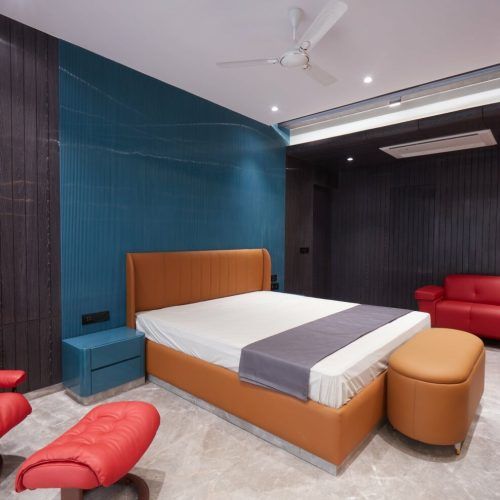
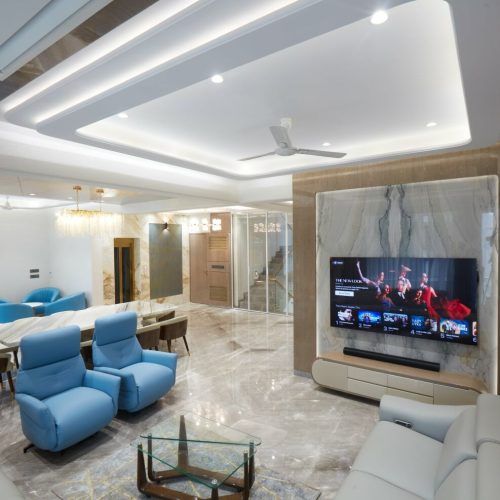
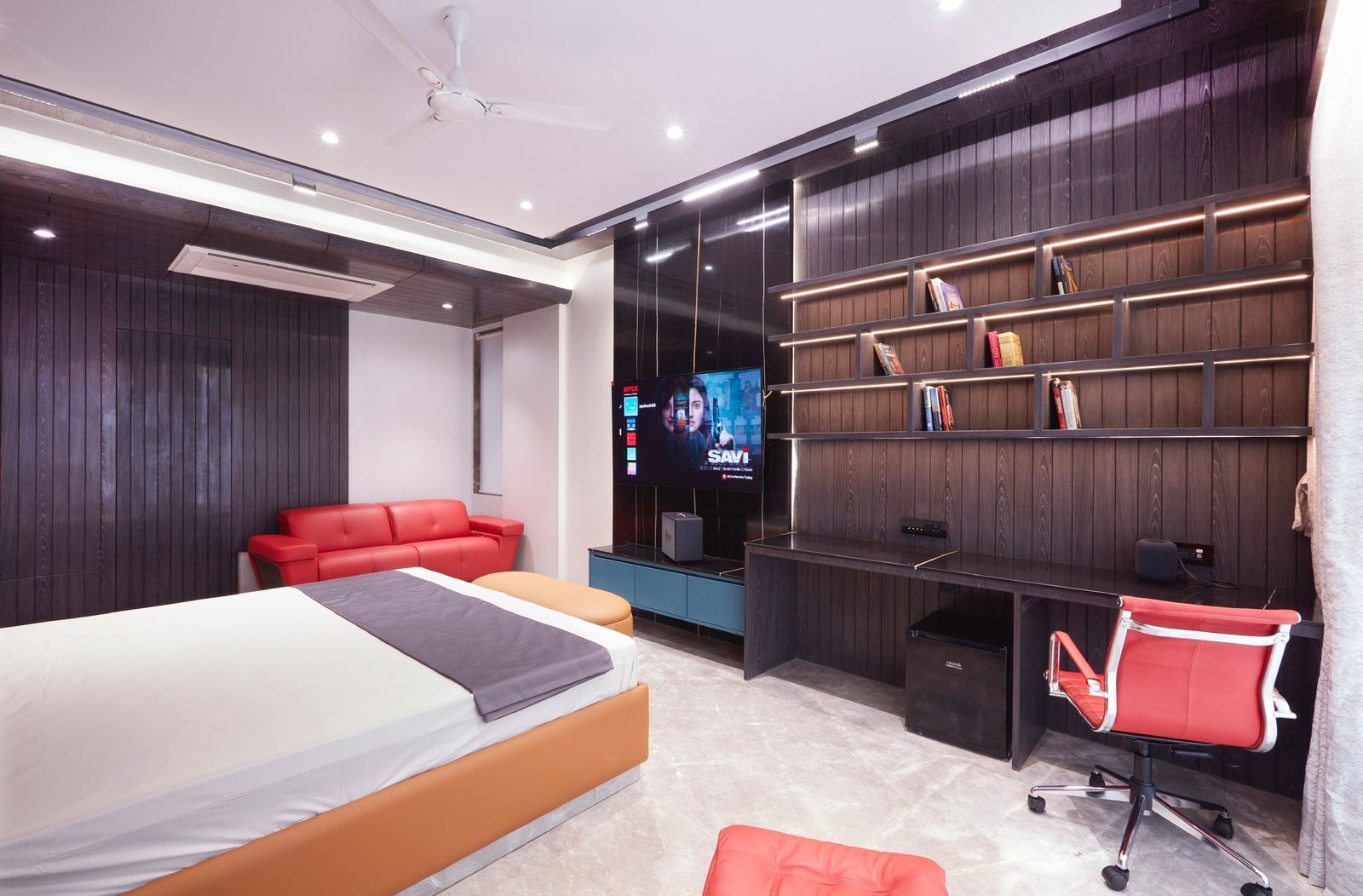
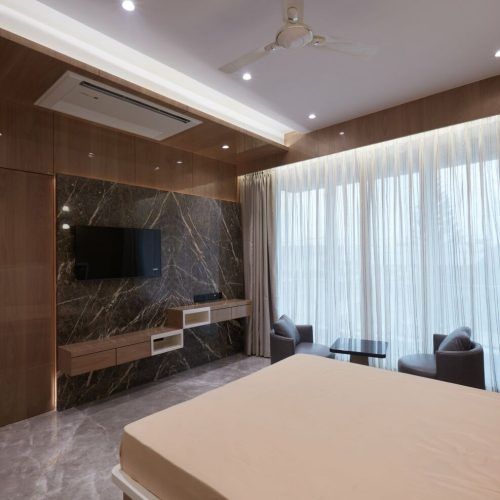
Selected work by Greenbox Design Studio. Tap any image to enlarge.
Frequently asked questions
What is the single most important question to ask an interior designer?+
Ask for a line-item BOQ with quantity, unit, rate and material brand for every element. Everything else — timeline, warranty, supervision — can be negotiated later, but a quotation without line items makes every other promise unverifiable.
How many interior designers should I meet before deciding?+
Three. Give each the identical floor plan, brief and budget ceiling so their quotes are comparable. Meeting more than three usually adds weeks of drift without improving the decision, because the proposals start to blur together.
Should I ask about the designer's fee separately from execution cost?+
Yes. A design-only fee in Mumbai typically runs 5–8% of project value, or ₹35–₹120 per sq ft for drawings and 3D. Studios that say design is free have folded it into the execution rate, which is fine provided you know what happens if you stop after design.
Is it rude to ask a designer about failed projects?+
No, and the answer is informative. Ask what went wrong on their most difficult project last year and how it was resolved. A studio that claims nothing ever goes wrong either has very little volume or is not being straight with you.
What should I ask about warranty before signing?+
Ask which elements are covered, for how long, and whether the studio or the manufacturer honours each one. Carcass warranties of ten years, one year on finishes and manufacturer-backed hardware warranties are the normal structure. Get it on the agreement, not the brochure.